

Classes range from 3 units, 8 units, 16 units, 32-40 units. Many courses are full day or weekend, some are broken into 3-4 hour blocks and taught over a period of time, while others are residential workshops. Class cost varies from location to location, so look at a specific class for cost. Many of our instructors are NCBTMB approved providers, and the course will be so noted. The instructors and class coordinators schedule the classes, so if you are interested in a class in your area and do not see one available on the schedule, you may get in contact with the class coordinator in your area and let them know your interest. If there are no classes offered in your area, there is additional information on becoming a class coordinator to bring a registered instructor to your area.
Why add Ortho-Bionomy training to your bodywork Education?
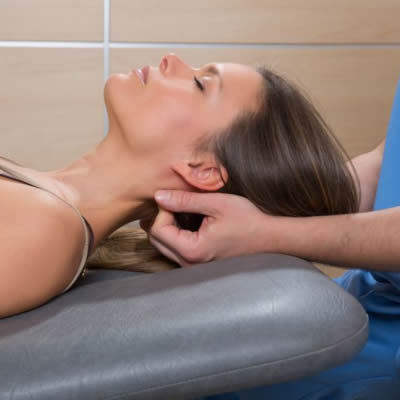
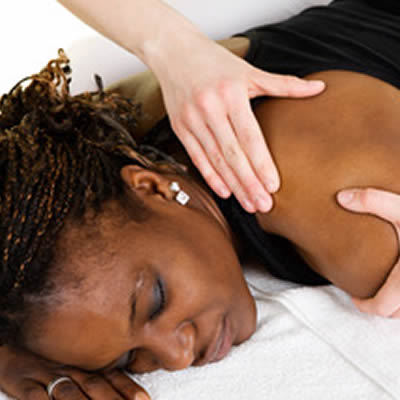
Ortho-Bionomy can change the dynamic of your services, from trying to “fix” your clients to instead supporting and facilitating their healing. In Ortho-Bionomy, clients actively participate in their own recovery and healing. Practitioners perform a gentle, non-invasive form of body therapy that works with chronic stress, injuries and pains or problems associated with postural and structural imbalances. These gentle positions, combined with self care techniques, facilitate changes in the client’s stress and pain patterns. With Ortho-Bionomy, we recognize the client’s pattern, find the position of comfort, exaggerate the position of comfort, and in turn support the body’s self-correcting reflexes.
Using Ortho-Bionomy can increase the scope of your practice and draw a wider client base. Because there are no contraindications to Ortho-Bionomy, you can use this modality with clients for whom massage is contra-indicated. Additionally, as Ortho-Bionomy sessions can be done with clothing on, you can draw clients who have trauma and/or body issues and are more comfortable clothed.
By attending Ortho-Bionomy workshops you have the opportunity to learn new techniques through hands on experience. You leave our workshops with skills you can use for yourself, and with your clients. These skills are a great way to set yourself apart from the other therapists in your area.
For more information on Ortho-Bionomy, please click
click here.
Incorporating Ortho-Bionomy into an Existing Bodywork Practice
Many Ortho-Bionomy workshop attendees are massage therapists, bodyworkers and alternative medicine practitioners. Many are searching for additional ways they can support their client’s healing process. They are also looking for a way to increase the longevity of their current practice, which can be physically demanding on their own bodies. Ortho-Bionomy can complement your existing practice by providing balance, comfort and stress relief.
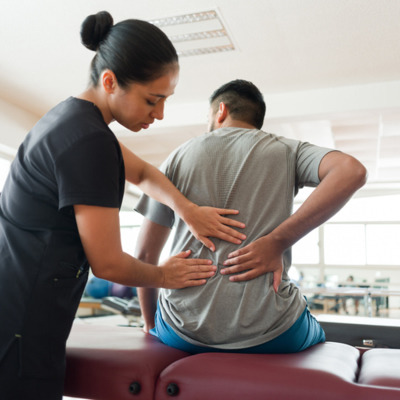
There is a toll that performing bodywork can take on your own body as a therapist. An aching back, wrists, hands and shoulders are common issues therapists face. Ortho-Bionomy can significantly decrease the pressure and force you apply in a client session, and can decrease the subsequent wear and tear on your body, while increasing your effectiveness. In Ortho-Bionomy workshops, you not only learn healing techniques, but body mechanics so you can provide supportive therapy to your clients, while reducing the stress placed on your own body.
Interested in Classes, but not a Bodyworker?
Do the Ortho-Bionomy principles appeal to you? Are you interested in increasing your self care abilities or possibly starting a healing practice? Regardless of your experience, Ortho-Bionomy can support your wellness practice, and expand your ability to find physical and energetic comfort.
Ortho-Bionomy sessions are a wonderful way to increase your body awareness and learn to change your patterns of discomfort. In an Ortho-Bionomy workshop, you will learn specific techniques for individual areas of the body, while supporting comfort and balance within yourself. In a session, you learn skills to work with your own pattern. In a workshop you leave with significant skills and awareness, and begin to learn how to share these skills with others. At its core, Ortho-Bionomy is about education. First we learn about ourselves and our patterns, then we learn to educate others. In a workshop, you begin to see how patterns of imbalance and discomfort can be supported, allowing changes to occur.
We learn ways to increase our ability to walk in life in balance and comfort. We give ourselves and those around us permission to be in comfort. Ortho-Bionomy compliments your existing wellness practices by providing additional tools to support balance and relieve the patterns of stress. These core benefits can enrich our lives. They provide support and comfort to both the individual providing care and to those to which the care is provided. A variety of workshops are offered, from three hour self care to in depth weekend and residential workshops.
Why do Classes begin with Phase 4? Where are Phases 1, 2 and 3?
Phases 1 - 3 are the foundational concepts and observations that brought Dr. Pauls to the development of the art, mood, and principles that are Ortho-Bionomy.
| Phase 1 |
Unconscious movement while sleeping |
| Phase 2 |
Conscious movement while sitting in a chair, Tai Chi, Yoga |
| Phase 3 |
Periods during which Dr. Pauls observed the ability of people to self-correct, and his study of Dr. Jones work, Spontaneous Release by Positioning (Strain/Counter-Strain). |
| Phase 4 |
Where Ortho-Bionomy Begins. A complete system of bodywork that combines gentle contact of tension points and
movement of the body, which initiate self-corrective reflexes. Specific movements and trigger
points are taught for muscular tension at each joint in the body from the first cervical region of
the neck to the toes. Included are techniques for the neck, back, shoulders, elbows, knees, hips,
hands and feet. Postural analysis and reeducation are emphasized. |
| Phase 5 |
A refinement of Phase 4, an introduction of new methods which allow a greater
amount of expression and participation of the person’s innate reflexes. The practitioner
initiates the movements, but the person's own reflexes guide the movement, position, and
pressure for relief.
|
| Phase 6 |
Working with the body’s electromagnetic field. Aura Work which allows self-balancing processes to begin through an interaction of the practitioner’s and person's auras. |
| Phase 7 |
The projection of a mental pattern which if the person accepts it, catalyzes self-correcting-reflexes which promote either specific postural changes or generalized well-being and integration. |
Testimonials
“After successfully recovering from a car accident with Ortho-Bionomy, I knew I needed to know more about Ortho-Bionomy, both for my own self care, and to support my clients. I began taking classes and was hooked. The blend of demonstration, hands on practice and handouts made the learning process easier for me. I am now an Ortho-Bionomy Practitioner and have transitioned my practice from Massage Therapy to almost exclusively Ortho-Bionomy. By working with my clients instead of “fixing” them, they seem to recover faster and stay well, even from issues that had been chronic. And, in a challenging economy, my client book has remained full.”

- D.W. |
Interested in Bringing Ortho-Bionomy Classes to your Area?
Many of our Instructors travel to teach, so if you are not finding the class you are looking for near you, bringing classes to you may be a good option. First you need to find an instructor willing to travel to your area. We suggest starting by looking at which instructors teach in your state or in neighboring states (
Find a Class) and contacting them. If you are unable to locate an instructor in this manner, you may click to
Find an Instructor.
Once you have found an instructor who is willing to consider teaching in your area, the agreement you reach is between you and the instructor. You will determine together the details of your role as the class coordinator. Coordinator duties usually include logistics and promotion. Generally the coordinator fee includes free attendance at the class and a percentage of profits. Coordinating classes can be rewarding on many levels.